- Industry: Higher Education
- Location: Columbia, South Carolina
- Size: 12.5M sq ft · ~40,000 students
How the University of South Carolina Built a Connected Facilities Operation With AiM
Featured product: AiM IWMS with ReADY Request and Go · Case study prepared by AssetWorks Facilities
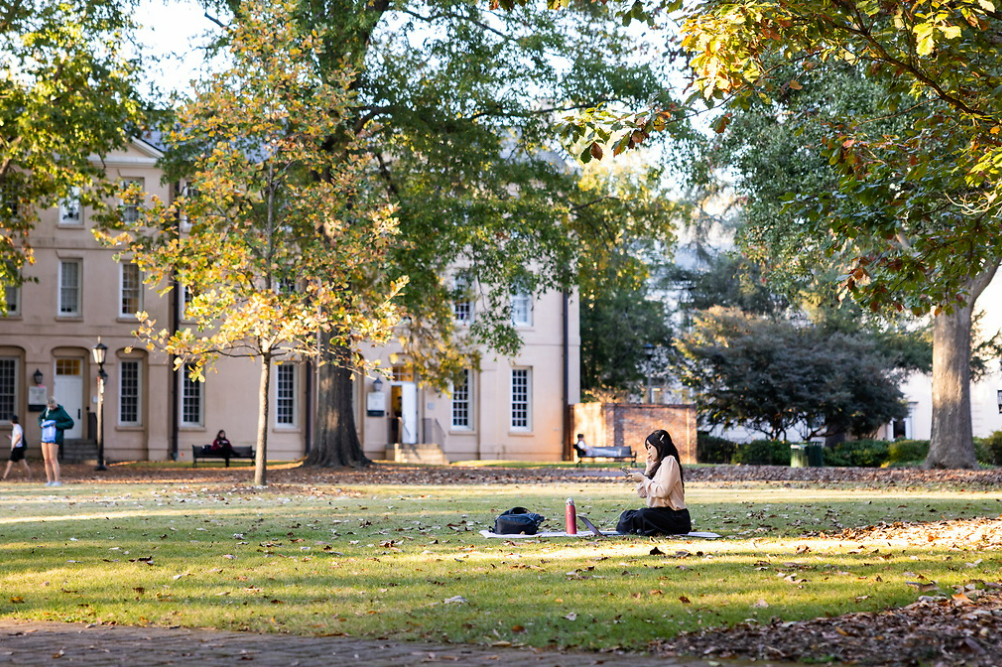
With 12.5 million square feet across 155 buildings in downtown Columbia, the University of South Carolina’s Facilities Management team supports more than 40,000 students and a campus that spans two centuries of architecture. Until recently, that operation ran on a work order system put in place in 1993 and kept going by decades of manual workarounds. In 2023, USC set out to replace it with one platform every department could work from, and chose AiM. About two years later, the team runs a centralized, data-driven operation built on AiM, ReADY Request, and Go.
The Challenge
When Daniel Rabon joined USC as Director of Facilities Business Intelligence (Informatics) in 2021, his mandate was to implement an IWMS that could serve the full facilities operation for the next 20-plus years. The system he inherited made basic operational visibility nearly impossible.
- Manual work intake. Requests came in by phone or online form. Call center staff typed each one into the legacy system, then printed it and handed it out to technicians, who often logged their time from memory at the end of the day.
- Data no one could trust. Standing work orders hid the true volume and cost of maintenance. Space data lived in spreadsheets that were outdated as soon as they were shared. Usage for 250+ electricity accounts was entered by hand every month.
- Hours lost to “windshield time.” With one central warehouse, technicians had to cross railroad tracks and downtown traffic to get supplies. That quietly used up thousands of labor hours each year.
- Siloed shops. Multiple shops worked without a shared view of operations, capital projects, or reporting.
There’s a lot of things in the system that just had limitations on it. So there’s a lot of workarounds to where now with AssetWorks, we don’t have to do those workarounds.
The AiM Solution
Building the Foundation
- One platform, not five. A cross-functional team from the call center, trade shops, capital projects, and accounting wrote a deliberately thorough RFP. It covered work orders, capital projects, lease administration, space, and energy, plus the detailed chargeback USC’s budget model requires.
- Integration depth. What set AssetWorks apart was AiM’s ability to connect with PeopleSoft, push live space data to the registrar, and automate data flows that used to be manual.
- The right team. A four-person business intelligence team (technical lead, business analyst, asset manager, and contract and utility administrator) worked with an advisory committee of call center, maintenance, space, lease, and utility plant staff.
- Point-of-use inventory. Working with Fastenal, USC placed 65+ vending machines across campus and connected them to AiM. A technician scans the work order in Go, the parts are dispensed, and the material cost is posted to that work order right away. Pre-assembled PM kits are matched to specific assets.
A Phased Rollout
- Work management and ReADY Request first. The launch was timed for summer so 120 technicians could get tablets and Go training before fall semester.
- Capital projects and energy management next, with the two modules rolling out at the same time where the team had capacity.
- Lease administration and space management, with department leads at the table for each go-live.
- Branch campuses. AiM is now rolling out across USC’s eight-campus statewide system.
July 1st we turned on the system and we haven’t slowed down. We’ve been growing ever since.
The Results
- $60KAnnual material savings from the Fastenal point-of-use model
- ~3 FTEsSaved in the call center through ReADY Request automation
- 2 FTEsMoved from delivery runs to floor care
- 250+Utility accounts fed into AiM automatically each month
Source: Figures reported by USC Facilities Management, August 2026.
Real-Time Data Replaces Manual Workarounds
- Requests come in through ReADY Request around the clock, and the system checks each chart field string so billing errors don’t happen later. That frees the call center to focus on solving root causes.
- Utility providers now send data files straight into AiM’s energy module. The staff member who used to enter that data now works as a contract administrator, supporting capital project managers and the branch campus rollout.
Lower Costs, Better-Used Labor
- Ending warehouse deliveries saves an estimated $60,000 a year in materials alone, before counting labor.
- Two delivery employees moved to floor care, expanding custodial coverage without adding headcount.
- Because PM kits are tied to AiM asset records, technicians arrive ready to work, and costs are captured at the work order level.
Visibility Inside and Outside Facilities
- Power BI dashboards built on AiM data have replaced spreadsheets at every level, from shop supervisors to AVPs and VPs. Building managers can see work order volumes, response times, and facility status for their colleges.
- USC dropped the chart field requirement for standard mission work, which opened ReADY Request to the whole campus. More requests came in, and that was the point.
Integration as a Strategic Differentiator
- AiM is now USC’s system of record for space. It sends live data every night to PeopleSoft, the registrar, and other enterprise systems.
- Next is a two-way PeopleSoft integration for requisitions, something project managers had wanted for more than a decade.
- AiM supports the university’s “One Carolina” strategy, connecting facilities data to campus law enforcement, student housing, academic scheduling, and GIS.
I think ReADY alone probably saved us three FTEs by just not being as manual with it.
Looking Ahead
Next on USC’s list: automating the remaining manual steps, expanding GIS across campus, and exploring how AI can make facilities operations more proactive, from spotting work order patterns to predicting recurring issues. As AiM reaches the remaining branch campuses and connects to more enterprise systems, the groundwork is already in place. In Rabon’s words: “We can’t say we don’t have the technology for it anymore since we do have AssetWorks. Now it’s making that light shine.”
Frequently Asked Questions
About two years. USC partnered with AssetWorks in 2023 and rolled out AiM one module at a time, starting with work management and ReADY Request, followed by capital projects and energy, then lease administration and space management. AiM is now being extended to USC’s seven branch campuses.
USC runs AiM, AssetWorks’ Integrated Workplace Management System (IWMS), for operations and maintenance, capital projects, energy, lease administration and space management. It pairs AiM with ReADY Request for campus work requests and the Go mobile app, which 120 technicians use in the field.
AiM sends live space data every night to PeopleSoft, the registrar’s office and other enterprise systems. Utility providers feed data for more than 250 electricity accounts straight into AiM’s energy module, and Fastenal vending machines post material costs to work orders automatically. Through the university’s “One Carolina” strategy, AiM also connects facilities data to campus law enforcement, student housing, academic scheduling and GIS.
Do You Have a Complex Facilities Landscape Like USC?
See how AiM can bring your work orders, space, energy, and capital projects together on one platform.

