





Colleges and universities are currently funding capital investment in existing buildings at only 73.5% of what's needed to prevent their renewal backlog from growing, according to Gordian's 13th Annual State of Facilities in Higher Education report (2026). Closing that gap has less to do with money, and more to do with whether the software behind the plan can survive how universities operate: budgets that reset every year, projects that take five to ten years, and boards that expect the math to hold up under scrutiny.
Every university capital planning office knows the cycle: a science building renovation here, a chiller plant replacement there, all routed up through finance for the board's approval. That work of identifying, prioritizing, and funding major infrastructure investments over a multi-year horizon is a fundamentally different job than day-to-day maintenance, and it tends to break down in the same four places, campus after campus.
University budgets typically run on an annual or biennial cycle, but capital projects, such as a new science building or a $60 million chiller plant replacement, routinely span five to ten years. Many university budgeting tools are built around that single-year rhythm, with nowhere to put a project once it crosses a fiscal year boundary.
Here's what that does to the numbers:
Nobody's wrong, exactly, but the systems are just answering different questions.

Software built for multi-year plans instead of single-cycle snapshots, like AiM Capital Planning and Project Management, keeps that history intact, so a project doesn't have to start over (or get re-explained three different ways) every time the budget calendar resets.
Large universities typically field far more capital requests than they can fund in any given cycle, and without a consistent, weighted scoring model, prioritization tends to default to whoever argues loudest rather than a repeatable standard.
Picture two requests on the same list: a $2 million roof replacement flagged by a recent facility condition assessment, and a $500,000 lab renovation with a compelling pitch behind it but no.png?width=279&height=273&name=AW%20Social%20Templates%20(87).png) supporting condition data. Score both against three weighted criteria, each rated 1 to 5:
supporting condition data. Score both against three weighted criteria, each rated 1 to 5:
The numbers settle it before anyone gets to the board.
That kind of scoring only works if every stakeholder is looking at the same underlying condition data in the first place, the kind of shared visibility that strategic asset management is built around, not a spreadsheet one department built for its own case.
Capital decisions should be informed by real condition data: work order volume, asset age, and recent facility condition assessments. When capital planning software is purchased and implemented separately from that maintenance data, planners can end up making funding decisions based on building-by-building reputation instead of how well the asset holds up.
Unifying that data doesn't mean starting over, but rather connecting capital requests to the same maintenance and asset records already in use elsewhere on campus: solutions like Assessment & Needs Analysis feeding AiM Capital Planning & Project Management through a unified data layer. That way, a funding decision can be checked against real condition data rather than anecdote.
.png?width=330&height=254&name=AW%20Social%20Templates%20(89).png)
One university proved this. The University of Florida connected its facilities data through AiM and secured $148 million of the $460 million in deferred-maintenance funding, backed by data its Assistant Vice President said left them "in a position to not be questioned."
Capital projects rarely draw on a single funding source. Bond issuances, state appropriations, gifts, and reserves often combine on the same project, each with its own timing and constraints. That's the kind of enterprise financial planning problem a simple line-item budgeting tool can't handle, since it can't model multiple scenarios side by side or show how a delay in one source cascades into a project schedule.
The stakes for getting this right are only growing. Moody's Ratings has estimated that colleges and universities collectively face $750 billion to $950 billion in capital needs over the next decade, calling the backlog a "hidden liability" for institutions that can't finance it strategically. Universities that can't run that kind of scenario planning aren't just working harder; they're less able to sequence bonds, gifts, and reserves in a way that keeps pace with that scale of need.
Before replacing one disconnected tool with another, ask your current system these five questions:
If more than one of these comes back a "no," the gap probably isn't your team's process, but the software underneath it. 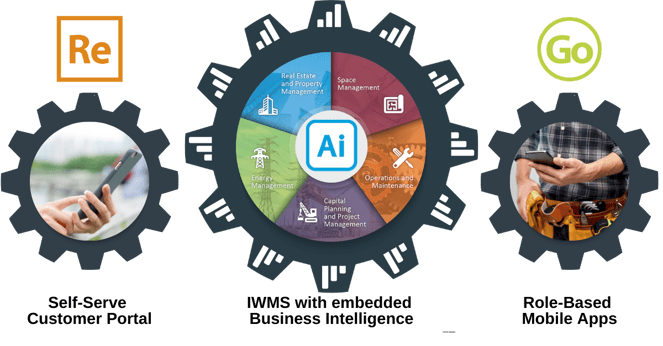 The fix is software tied to real facilities data instead of scattered files. AssetWorks' Facilities capital planning and project management module does this: a capital request can be checked against verified condition data instead of a subjective read on urgency. None of this works in a silo, which is why AiM, ReADY, and Go, are designed to work together seamlessly around the same underlying data.
Capital planning software isn't inherently the problem: mismatched budgeting cycles, weak prioritization, disconnected data, and thin funding models are. Universities that fix those root causes end up with a capital plan that finance, facilities, and the board can trust.
If any of this sounds like what your capital planning process runs into every year, our team is glad to talk through where the disconnects might be on your campus. Let's talk.
Frequently Asked Questions
Q: Why does capital planning software fail at large universities?
A: It typically fails when it's built for single-year budgeting rather than multi-year capital projects, when it can't apply consistent criteria to prioritize competing requests, or when it operates separately from maintenance and facility-condition data. Any one of these gaps forces planners back into manual spreadsheets and disconnected re-entry, which undermines the accuracy of the entire capital plan.
Q: What's the difference between capital planning software and a CMMS?
A: A CMMS (Computerized Maintenance Management System) is designed for day-to-day maintenance work — scheduling routine upkeep and tracking work orders. Capital planning software is built for a different job: prioritizing, funding, and tracking large, multi-year infrastructure investments, ideally informed by the same maintenance data a CMMS produces.
Q: How should universities evaluate capital planning software before buying it?
A: Look for software that supports multi-year project tracking rather than single-year budgets, connects directly to existing facilities and maintenance data, and can model multiple funding scenarios — bonds, state appropriations, gifts — side by side. If a tool can't do all three, it will likely need to be supplemented with spreadsheets within the first budget cycle.
A couple of years ago, selecting the best utility management software for your college or...
Learn more
Kinetic and AssetWorks partner to deliver integrated management for accommodation and facilities in...
Learn more.jpeg)
Universities today are balancing shifting enrollment patterns, growing sustainability commitments,...
Learn more