





The facilities management (FM) industry stands at the threshold of a new era, shaped by smarter technology, evolving service and workforce expectations, and a stronger commitment to sustainability. Across campuses and institutions, facilities leaders are reimagining how spaces can better serve the people who rely on them every day.
As 2026 approaches, facilities organizations will continue to face challenges, but new opportunities make this an exciting time to work in the FM industry. Economic pressures demand sharper cost control, while ambitious sustainability goals call for long-term investment. At the same time, emerging technologies are beginning to unlock actionable insights—enabling data-driven planning, stronger accountability and ownership of business outcomes, and greater operational transparency.
At AssetWorks Facilities, we are working alongside institutions to help them navigate this evolving landscape. Here are five trends we see that will likely shape how facilities are managed in 2026 and beyond, and how forward-thinking teams can start to get ahead.
In 2026, facilities organizations will become more reliant on the data generated by daily operations. Cleaner, more reliable data will become the foundation for daily tactical decisions and long-term strategic planning. Modern Integrated Workplace Management Systems (IWMS) unify information across assets, space, maintenance, capital planning, and energy into a single, trusted source of truth.
.webp?width=400&height=398&name=help-02%20(1).webp)
With connected, reliable data, facilities leaders can:
This shift is expected to continue a trend in demand for reliable operational and process data, which impacts business outcomes. Data-driven decision-making can be reasonably expected to rely on meaningful metrics that are predictors or proxies for measurable outcomes.
As the APPA 2024 Thought Leaders Report: The Campus of 2030 notes:
“The real challenge is what institutions do with this information… Collecting data isn’t enough—you must analyze and interpret that data to set a path forward.” (p.23)
This reflects a move from data accumulation to data application, where reporting and analytics help facilities organizations tell a clear story to leadership, justify investment, and align decisions and processes with the institutional mission.
Want to strengthen data confidence? Explore how IWMS technology supports smarter planning and more informed decision-making.
Sustainability is no longer a “nice-to-have”—it’s becoming an operational expectation. In 2026, many facilities organizations will be expected to show measurable progress on green initiatives through clearer tracking, stronger reporting, and tighter integration into day-to-day work.
Our solutions support this shift with Energy & Sustainability capabilities, which are designed to embed sustainability directly into facilities operations. Built-in functionality supports green initiatives through definition and scoring, operations and maintenance integration, and reporting, helping teams manage sustainability as part of how work gets done, not as a separate effort.
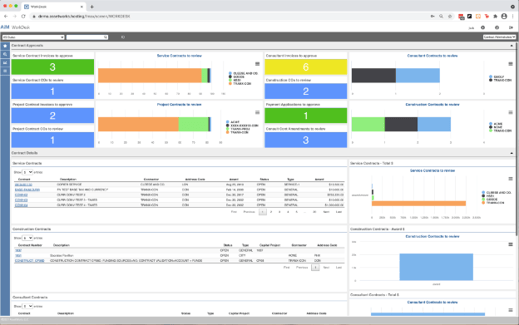
In 2026, the most resilient institutions will treat sustainability as a core operational principle, not an optional program, embedding it into capital planning, asset lifecycle decisions, and day-to-day maintenance work.
Discover how AssetWorks Facilities supports sustainability tracking: Explore our energy and sustainability management tools.
One of the most pressing challenges for facilities leaders is an impending labor shortage.
According to the APPA 2024 Thought Leaders Report: The Campus of 2030:
“Higher education won’t be alone in this challenge, but it will be particularly hard hit by the imminent retirement of a vast number of workers. In the United States in 2023, three in ten of those working in higher education were 55 or older, according to the Higher Education Human Resources Association CUPA-HR.” (p. 8)
This demographic shift will leave a significant knowledge gap across facilities and operations teams. To prepare, institutions are investing in digital training, mobile tools, and systems that make work more efficient, processes more consistent, and core responsibilities easier to learn and manage.
Yet technology is only part of the answer. The next generation of facilities professionals will need mentorship, flexibility, and inclusion to thrive. Organizations that build cultures of continuous learning will turn this workforce transition into an opportunity for renewal.
Future-proof your team: Explore AssetWorks Continuing Education (ACE) for training and professional development designed to strengthen technical skills and leadership in facilities teams.

The “smart campus” is no longer an abstract vision; it’s a practical reality for many institutions. Powered by Internet of Things (IoT) sensors, automation, and integrated facilities technology, campuses are becoming more adaptive, efficient, and responsive.
The APPA 2024 Thought Leaders Report: The Campus of 2030 explains:
“Smart systems will monitor themselves, notifying facilities professionals when maintenance or repairs are needed, even ordering necessary parts and scheduling staff.” (p.14)
This level of automation allows campuses to run more efficiently, reduce downtime, and extend the life of critical systems. Beyond efficiency, connected operations support resilience by helping leaders adapt to changing occupancy patterns, energy demands, and safety requirements.
In 2026, the most successful connected campuses won’t rely on isolated tools; they’ll focus on integration and automation that keeps information flowing across systems. When work management, asset data, and analytics platforms stay in sync, facilities teams can minimize reactive repairs over time and move operations toward predictive maintenance and planned asset renewal.
Explore smarter automation and integration: With Business Automation, Standard Data Connectors, and the Fault Detection & Diagnostics (FDD) integration solution, AssetWorks Facilities helps streamline connected campus operations and catch issues early—using embedded business intelligence tools like AiM IQ and Power BI for clear reporting and insights.
Financial constraints are reshaping how institutions plan and invest in infrastructure. Facilities teams are being asked to do more with less, but strategic, data-backed planning is making that possible.
Capital planning software and asset lifecycle management tools enable leaders to forecast costs, prioritize projects, and demonstrate return on investment. By connecting operational metrics to mission outcomes, teams can communicate the long-term value of their investments more clearly than ever before.
In 2026, strategic planning won’t just mean balancing the books; it will mean aligning every dollar with student experience, safety, and sustainability outcomes.
Explore how data-driven capital planning helps leaders invest smarter: See Capital Planning in action.
As the FM industry looks toward 2026, one thing is clear: lasting progress won’t come from technology alone. It will come from people—supported by reliable data, clear priorities, and tools that help them do their work more effectively.
Facilities teams across institutions are already thinking through how these trends will shape their operations in the years ahead. Approached thoughtfully, they offer an opportunity to plan with greater confidence and focus on long-term impact.
If you’re considering how these trends may affect your organization, talk to our team today!

When I think back to the early days of my AssetWorks career, I remember some of our customer...
Learn more
AssetWorks Announces a Strategic Partnership with SFG20, Elevating Facilities Management in UK...
Learn more
If you manage facilities for a state or local government, chances are you’ve heard about the DOJ’s...
Learn more