



Most university facilities teams aren't short on data, but rather short on data that talks to itself.
Space utilization lives in one system, work orders in another, and asset records somewhere else entirely. When those systems don't connect, your team spends more time assembling information than acting on it, and leadership makes capital decisions based on a picture that's always slightly out of date.
That's the core problem that an Integrated Workplace Management System (IWMS) is designed to solve. And right now, the stakes for getting this right are unusually high.
| $156/gross square foot (gsf) — The deferred capital renewal burden on North American campuses — an 8% increase in a single year, nearly double 2008 levels. Institutions are investing only 73.5% of what's needed to keep the backlog from growing. (Gordian, State of Facilities in Higher Education, 2026)
That gap doesn't close with budget alone; it closes with better decisions, made faster, from data you can trust. The universities that are winning funding conversations right now have one thing in common: they can prove their case with numbers, not just narratives.
An IWMS isn't a single product; it's an integrated platform that connects the functions facilities teams already manage separately: operations & maintenance, space management, capital planning & project management, real estate, energy use & billing, assets, and reporting. When these functions share a common data layer, actions in one area automatically inform the others.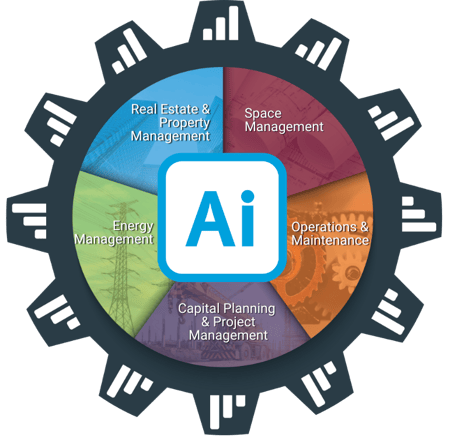
The difference shows up in everyday operations. A work order for a failing HVAC unit should automatically reference that asset's maintenance history, flag its age against its expected useful life, and surface whether repair or replacement makes financial sense, without anyone opening a second system. Technicians in the field keep that data current in real time, so the platform reflects what's happening on campus today, not what was logged last week.
The downstream effect matters most at the leadership level. When facilities data is centralized, the conversation with boards and state agencies shifts from anecdotal to evidential. Institutions with centralized, reliable data don't just tell a better story but also walk into funding conversations with evidence that's hard to question.
| "The AssetWorks products that we have integrated over the years have really given us the tools that we've needed to track funding on our assets, make decisions about repair versus replacement, and have in-depth conversations around deferred maintenance dollars and how we spend those funds." — Jordan Benton, Assistant Director of Business Operations, University of Florida Facilities Services
Learn how the University of Florida used centralized facilities data to secure $148 million in deferred maintenance funding.
AssetWorks Facilities (GoAssetWorks) is built exclusively for higher education, not adapted from another industry and retrofitted for campus life. That distinction runs through everything, from how our core products: ReADY, AiM, and Go are structured, to how individual tools are designed for the people using them.
Take ReADY Request as an example. We built the request portal with the campus community in mind, considering that universities set a higher bar for customer communication than many industries. Students, faculty, and staff expect transparency and responsiveness when they submit a request, and that expectation is baked into how ReADY Request works, not bolted on after the fact.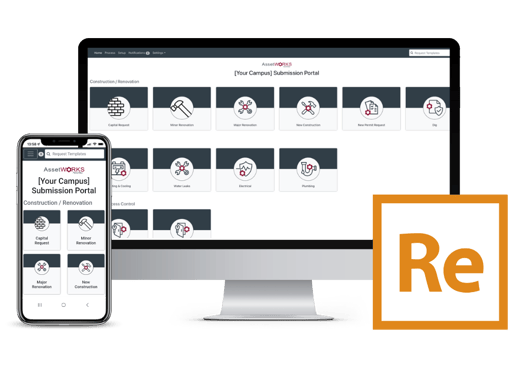
That same philosophy carries through the entire platform. Every tool we build starts with the same question: what does the campus community truly need? Purpose-built for higher ed, not retrofitted for it, and our track record reflects that. See why 150+ institutions trust our company to run their campuses.
That philosophy is best understood in practice. Space management is one of the most politically charged and chronically misunderstood challenges on any campus, and a prime example of what a connected data layer makes possible.
Most institutions have buildings they believe are at capacity and buildings that are quietly underutilized, but without reliable utilization data, those assumptions go unchallenged for years.
The result is familiar: departments asking for more space while adjacent rooms sit empty, capital requests built on estimates rather than evidence, and space allocation decisions that reflect history more than current need.
A centralized IWMS connects room inventory and classification data to actual utilization metrics, giving facilities leaders and the academic and financial leaders they report to a real picture of how space is being used. For campuses navigating enrollment uncertainty, that visibility has direct strategic value and shifts the space conversation from political to evidential.
It also supports the FICM-compliant reporting required for federal compliance and national benchmarking, without a separate manual process to produce it. For many institutions, the first step is getting space data out of siloed systems and into one place.
For institutions ready to consolidate that data, ReADY Space makes it possible, democratizing space data that has traditionally been siloed and putting it in the hands of the people who need it most. Space Survey, built into ReADY Space, captures detailed occupancy and usage data at the room level. For large research institutions, especially, that detail translates directly to recaptured costs and more accurate reporting.
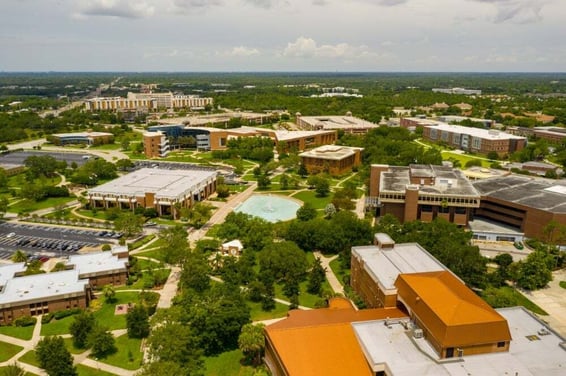
Read more about how the University of Central Florida consolidated two competing systems
into one IWMS, and cut integration costs in the process.
The clearest payoff of a centralized IWMS is what happens at the leadership level. When space, asset, maintenance, and project data share a platform, reporting and analytics shift from a manual assembly process to a real-time view.
That means:
All of it is available on demand, not compiled the week before a board meeting.
.webp?width=352&height=352&name=AiM%20Graphic%20(1).webp)
The University of Florida's Facilities Services team saw this directly. Managing over 1,000 buildings across 2,000 acres and nearly 25 million square feet, UF used centralized AiM data to build the evidence base for a major state funding request.
| "The next school got sixty million. So, we are huge players at the table, and I truly believe it's because I can give reliable data to my Board of Trustees, who can then go to the Board of Governors to show our story. We could back it up, and we were in a position to not be questioned." — Mark Helms, Assistant Vice President, University of Florida Facilities Services
That's what centralized data makes possible: not just running a campus more efficiently, but being unquestionable when it matters most.
If your institution looks anything like UF or UCF, the question isn't whether a centralized IWMS would help; it's how much the current fragmentation is already costing you.
Across higher education, universities managing complex, aging portfolios are finding that the shift from fragmented systems to a centralized IWMS changes what's possible, not just operationally, but in the funding and planning conversations that determine a campus's trajectory.
The institutions that see the greatest impact tend to share a few characteristics:
If any of those describe your institution, you already know the cost of fragmented data. The question is how much longer it makes sense to absorb it. Let's talk about what a connected platform built for higher education looks like for your campus.
.jpeg)
Universities today are balancing shifting enrollment patterns, growing sustainability commitments,...
Learn more
The facilities management (FM) industry stands at the threshold of a new era, shaped by smarter...
Learn more
Colleges and universities face an ongoing dilemma:how to meet today’s urgent facility needs while...
Learn more